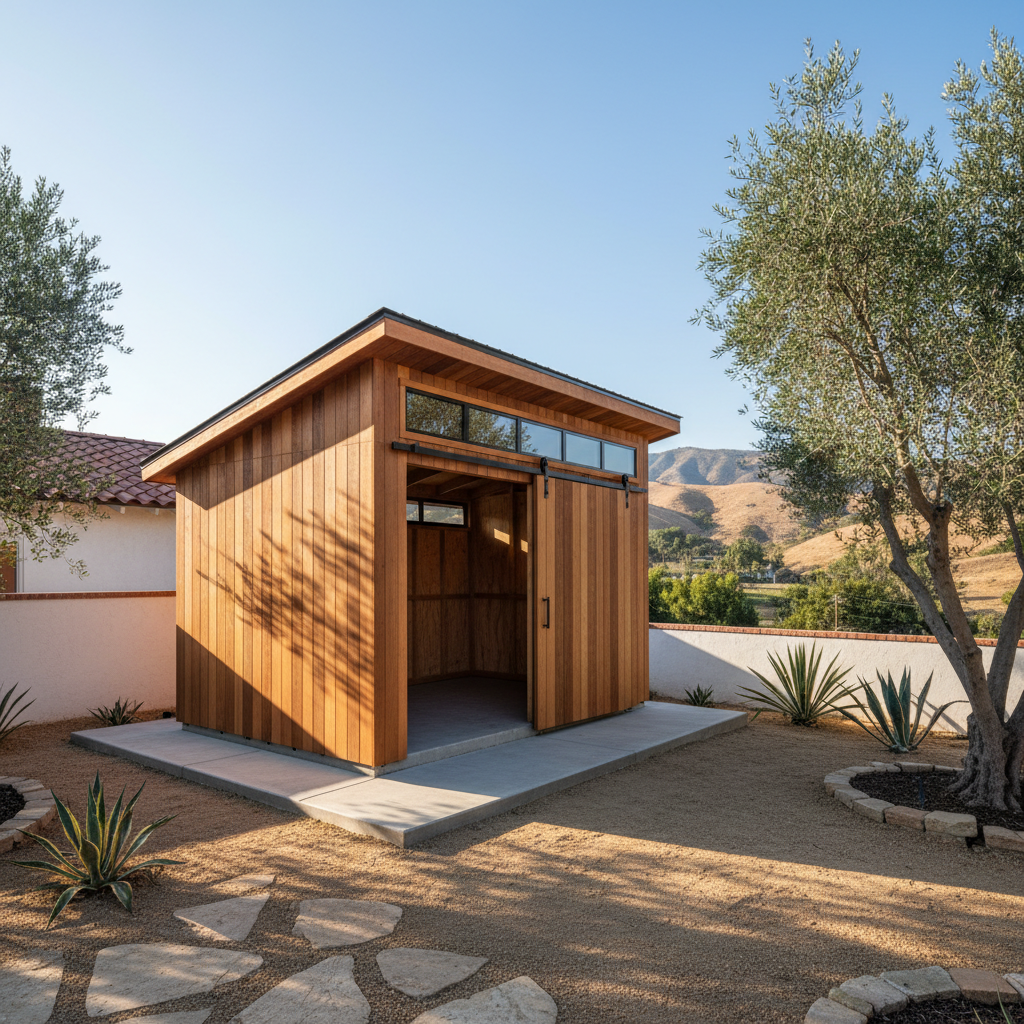
Thinking about a custom shed for your Los Angeles property? That's a great idea! A well-designed shed can really boost your property's value and how you use your space. But let me tell you, I've been in this business a long time, and I've watched people make some pretty common mistakes. These blunders turn what should be an exciting project into a real headache. You definitely don't want that, so let's talk about what to steer clear of.
Ignoring Local Building Codes & Permits
This is probably the biggest one, and it's a huge red flag if a contractor doesn't bring it up right away. You can't just drop a structure in your backyard in LA without checking with the city first. Depending on your shed's size, height, and what you plan to use it for, you'll probably need permits. We're talking about the Department of Building and Safety here, and they don't mess around. Ignoring this can lead to fines, forced demolition, or having to tear down your new shed and rebuild it. It's not just about the shed itself; it's about things like setbacks from property lines, fire ratings, and even how it affects stormwater runoff, especially with our occasional heavy rains. A good contractor, like us at Los Angeles Shed Solutions, knows the ins and outs of LA's specific zoning and permitting rules and will walk you through the whole process. If a builder tells you, "Don't worry about permits," run the other way. Seriously, just go.
Underestimating the Foundation
You might think, "It's just a shed, how complicated can the foundation be?" Well, it's more crucial than you might imagine, especially here in Los Angeles. We've got all sorts of soil conditions around here, from sandy loam near the coast to more clay-heavy soils inland, and some spots even have expansive soils that can shift. A poor foundation means your shed won't last. It'll settle unevenly, doors will stick, windows won't close right, and you'll end up with structural problems down the road. I've seen folks try to cut corners with a few patio pavers on uneven ground, and it's a recipe for disaster. A proper foundation, whether it's a concrete slab, pressure-treated skids, or piers, needs to be designed for your specific site and the shed's weight. Don't let anyone convince you a quick-and-dirty foundation is good enough.
Focusing Only on Price, Not Value
Everyone wants a good deal, I totally get that. But when you're talking about a custom structure that's going to stand in your yard for years, the cheapest bid often turns out to be the most expensive in the long run. I've seen people go with the lowest bidder only to find out the materials are sub-par, the craftsmanship is sloppy, or the contractor disappears halfway through the job. You're paying for expertise, quality materials, and a reliable build, aren't you? Ask about the type of wood, the roofing materials, the fasteners they use. Are they using exterior-grade materials that can stand up to our hot summers and occasional damp winters? Are they licensed and insured? If a price seems too good to be true, it probably is. You want a shed that's built to last, not one that'll be falling apart in five years.
Not Thinking About Future Use or Accessibility
This is a common one. You design a shed for storage, but then a year later, you decide you want to turn it into an art studio or a home gym. If you didn't plan for things like electrical access, proper insulation, or even enough natural light during the initial design, you're looking at costly retrofits later. Think a few years down the line. Will you need power for tools, lighting, or climate control? What about internet? How will you get larger items in and out? A narrow door might be fine for garden tools, but not for a workbench or a treadmill. Consider the path to the shed too. Is it easy to access with a wheelbarrow or for moving furniture? Don't just think about today; think about tomorrow.
Skipping the Contract Details
A handshake is nice, but it won't protect you if things go south. Always get a detailed contract. This document should spell out everything: the exact scope of work, materials to be used (brands, types, grades), the total cost, payment schedule, timeline for completion, warranty information, and who's responsible for permits and site cleanup. Make sure it includes what happens if there are delays or changes. If a contractor hesitates to put everything in writing, that's a huge red flag. You need clarity and protection, and a solid contract provides that. It ensures everyone is on the same page and minimizes misunderstandings.
Building a custom shed should be an exciting process, not a stressful one. By avoiding these common mistakes, you'll be well on your way to getting a functional, beautiful, and long-lasting addition to your Los Angeles home.